Haritaki (Terminalia chebula) is one of the most respected fruits in Ayurveda. Although it may not receive as much attention today as popular wellness ingredients, classical Ayurvedic texts have valued this remarkable fruit for centuries. Known for its role in supporting digestion, bowel regularity, and overall balance, Haritaki truly deserves a place in the Forgotten Fruits of Ayurveda series.
What Is Haritaki?
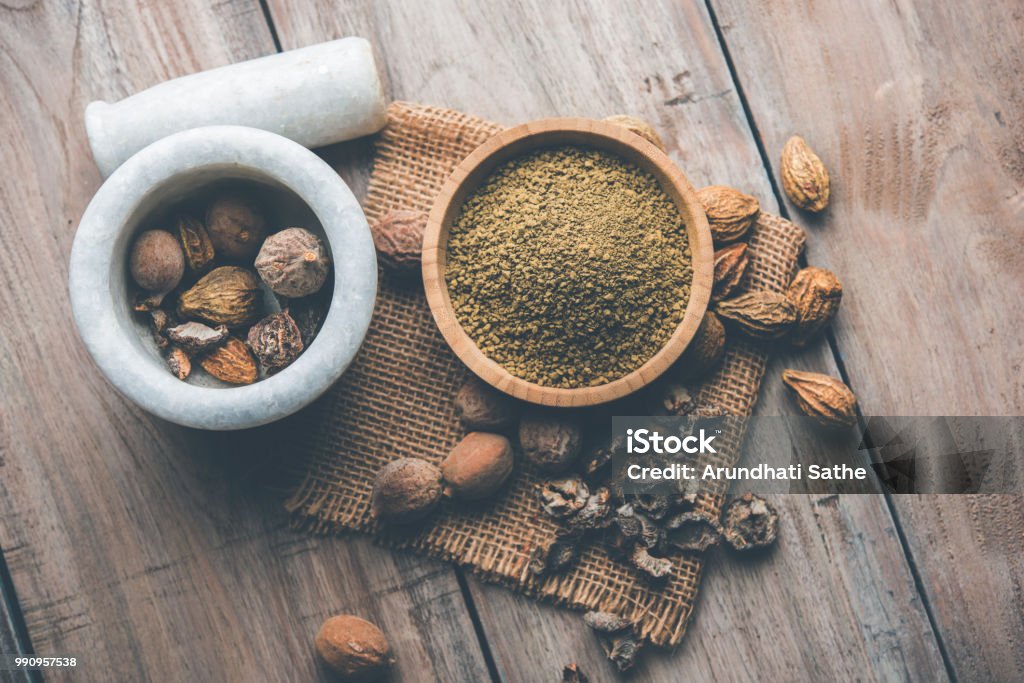
Haritaki is the dried fruit of the Terminalia chebula tree. In Ayurveda, it is considered an important Rasayana, a category of rejuvenating substances traditionally associated with supporting vitality and long-term wellbeing.
The fruit has a predominantly astringent taste, along with several other tastes. Ayurveda traditionally describes Haritaki as having five of the six rasas, or tastes, with the exception of salty taste.
Because of its unique qualities, Haritaki has been used in many traditional Ayurvedic formulations.
Haritaki and the Three Doshas
Ayurveda describes Haritaki as a versatile fruit that can support the balance of all three doshas—Vata, Pitta, and Kapha—when used appropriately.
However, Ayurvedic practitioners may recommend different ways of taking Haritaki depending on an individual’s constitution and imbalance.
For example, Haritaki is traditionally valued for its ability to support Apana Vata, the aspect of Vata associated with elimination. Therefore, it is commonly included in Ayurvedic approaches to sluggish digestion and irregular bowel movements.
A Key Ingredient in Triphala
Haritaki is one of the three fruits that make up the famous Ayurvedic formulation Triphala. The other two are:
- Amalaki (Emblica officinalis)
- Bibhitaki (Terminalia bellirica)
Together, these three fruits have been traditionally used to support digestion, elimination, and overall wellbeing.
Among them, Haritaki is especially associated with supporting healthy Vata balance and the natural process of elimination.
Traditional Benefits of Haritaki
1. Supports Digestion
Ayurveda places great importance on Agni, or digestive strength. When digestion becomes sluggish, Ayurveda believes that undigested metabolic waste, known as Ama, may accumulate.
Haritaki has traditionally been used to support healthy digestion and proper elimination. Consequently, it remains a well-known ingredient in Ayurvedic digestive formulations.
2. Encourages Regular Bowel Movements
Haritaki is perhaps best known for its traditional role in supporting bowel regularity. Unlike harsh approaches that may force elimination, Ayurveda traditionally uses herbs according to the individual’s constitution and digestive condition.
Therefore, the dose and method of use can make an important difference.
3. Traditionally Supports Vata Balance
Excess Vata may be associated, in Ayurvedic theory, with dryness, irregular digestion, and irregular elimination. Haritaki is traditionally considered useful in formulations designed to support balanced Vata and healthy Apana Vata.
4. Used in Rasayana Practices
Ayurveda has traditionally included Haritaki in Rasayana practices aimed at supporting strength, vitality, and healthy ageing.
This does not mean that Haritaki is a miracle fruit. Instead, its traditional importance comes from its broad role in Ayurvedic wellness practices.
5. May Support Oral and Digestive Wellness
According to Ayurvedic theory, excess Vata can contribute to dryness, irregular digestion, and irregular elimination. Modern research continues to investigate the compounds found in Terminalia chebula, including its antioxidant and other biological properties.
How Ayurveda Traditionally Uses Haritaki
People use Haritaki in several forms, including:
- Haritaki powder or churna
- Tablets or capsules
- Decoctions and traditional preparations
- Triphala formulations
- Other classical Ayurvedic combinations
The appropriate form and quantity can vary depending on factors such as digestion, constitution, age, and the reason for use.
Therefore, you should not take large amounts of a natural remedy simply because people consider it beneficial.
Haritaki: A Fruit Worth Remembering
In a world that constantly embraces new superfoods and trending supplements, people often overlook ancient fruits such as Haritaki.Yet Ayurveda has preserved knowledge about this fruit for generations.
Haritaki represents an important Ayurvedic principle: supporting health often begins with proper digestion, elimination, and balance.
As part of the Forgotten Fruits of Ayurveda series, Haritaki reminds us that traditional knowledge does not always come in fashionable packaging. Sometimes, one of Ayurveda’s most valuable fruits is a small, dried fruit that has quietly remained important for centuries.
Final Thoughts
Haritaki is more than just an ingredient in Triphala. It holds a significant place in Ayurvedic tradition as a fruit associated with digestion, elimination, Vata balance, and Rasayana practices.
While modern wellness trends continue to introduce new ingredients, revisiting Forgotten Fruits of Ayurveda: Haritakican help us appreciate the traditional plants that have shaped Ayurvedic practice for centuries.
Disclaimer: This article is for educational purposes only and is not a substitute for professional medical advice, diagnosis, or treatment. Consult a qualified healthcare professional or Ayurvedic practitioner before using Haritaki, especially if you are pregnant, breastfeeding, taking medications, or managing a medical condition.

Hello!!
I’m Dr. Malini Bhat MD (Ayu); an Ayurvedic Doctor and a health blogger. Follow me on social media to get daily health tips which you can easily adapt to a healthy lifestyle.