Coriander seeds in Ayurveda have long held a place in the traditional kitchen and herbal repertoire. Known as Dhanyaka, coriander seeds offer a gentle, aromatic flavour while Ayurveda traditionally values them for supporting comfortable digestion and maintaining balance.
Unlike many strongly heating spices, coriander seeds have a naturally refreshing character. Therefore, they can fit particularly well into meals and preparations designed to support Pitta balance.
Today, coriander often appears mainly as a seasoning. However, traditional Ayurvedic practices have used the seeds in several simple preparations. As a result, this familiar kitchen spice deserves a closer look.
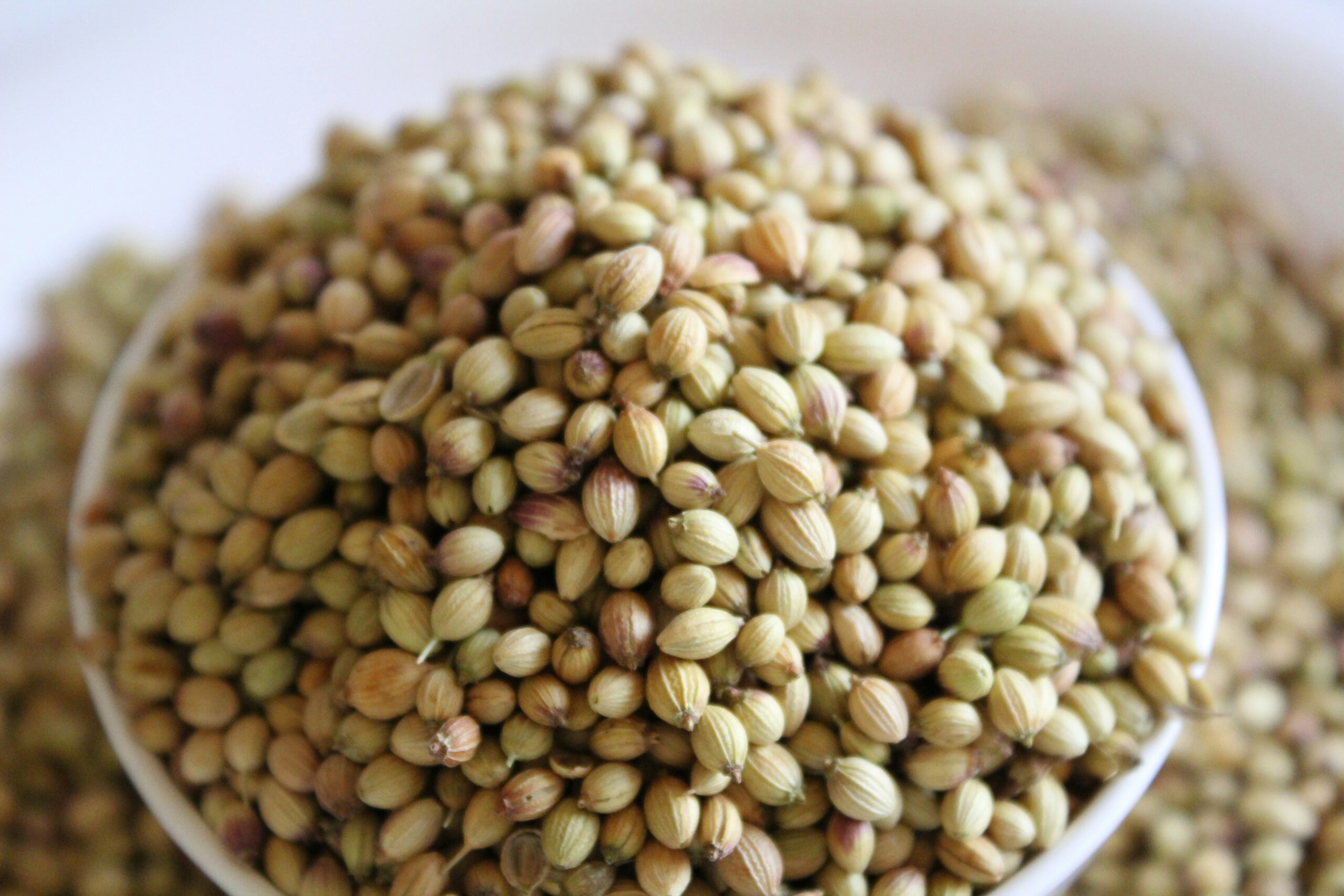
What Are Coriander Seeds?
Coriander seeds come from the Coriandrum sativum plant. The small, round seeds develop after the plant flowers and offer a warm, citrus-like aroma when crushed.
Although coriander leaves and coriander seeds come from the same plant, they have different culinary characteristics. The seeds provide a deeper, warmer flavour and commonly appear in spice blends, curries, dals, pickles, and herbal preparations.
In Ayurveda, coriander seeds are traditionally known as Dhanyaka.
Coriander Seeds in Ayurveda
Ayurveda traditionally describes coriander seeds as relatively light and cooling compared with many other culinary spices. Their qualities make them especially interesting when meals need flavour without excessive heat.
Traditionally, coriander seeds are associated with support for:
- Comfortable digestion
- Healthy appetite
- Balanced Pitta
- Comfortable urinary function
- A feeling of freshness during warm weather
- Normal elimination
However, Ayurvedic effects depend on the individual, preparation, quantity, and overall diet.
Coriander Seeds and the Doshas
One reason coriander seeds in Ayurveda remain useful is their relatively gentle nature.
Coriander Seeds for Pitta
Coriander seeds are traditionally considered particularly suitable for Pitta. Their cooling quality can complement meals when excessive heat or spiciness does not suit an individual.
Therefore, coriander can work well in summer recipes, cooling spice blends, and mild digestive preparations.
Coriander Seeds for Vata
Vata types may also enjoy coriander seeds, especially when they combine them with warming ingredients such as cumin, ginger, or fennel.
Because Vata generally benefits from warmth, moisture, and regular meals, coriander works best as part of a balanced preparation rather than in excessive amounts on its own.
Coriander Seeds for Kapha
Coriander can also appear in Kapha-friendly cooking. However, Kapha generally benefits from lighter, warming, and stimulating meals.
Therefore, coriander seeds can pair nicely with stronger spices such as black pepper, ginger, or cumin when preparing meals for Kapha balance.
Traditional Digestive Uses
Coriander seeds have traditionally been used to support comfortable digestion. Their pleasant aroma also makes them an easy addition to everyday cooking.
For example, lightly crushed coriander seeds can add flavour to:
- Dal
- Vegetable curries
- Soups
- Rice dishes
- Spice blends
- Herbal teas
Additionally, coriander seeds often pair well with cumin and fennel. This combination creates a simple aromatic spice blend that many people enjoy after meals.
Coriander Seed Water
One traditional way to use coriander seeds involves preparing a mild infused water.
To make it, lightly crush a small quantity of coriander seeds and steep them in hot water. Allow the infusion to cool to a comfortable temperature before drinking.
Traditionally, people use coriander seed water as a gentle digestive drink. However, it should not replace medical treatment for persistent digestive or urinary symptoms.
Coriander Seeds for Summer
Coriander seeds can become especially useful during warmer months.
Ayurveda places considerable importance on adapting food and daily habits according to the season. Because coriander has traditionally been viewed as cooling, cooks often include it in summer-friendly meals.
For instance, coriander seeds can add flavour to light vegetable dishes without relying heavily on very pungent spices.
Consequently, they provide an easy way to bring variety to warm-weather cooking.
How to Use Coriander Seeds in Your Kitchen
You do not need complicated preparations to enjoy coriander seeds.
Try these simple options:
- Dry roast and grind them for a fresh homemade spice powder.
- Add crushed seeds to dals for extra aroma.
- Use them in vegetable curries alongside cumin and turmeric.
- Add them to soups for a subtle citrus-like flavour.
- Prepare a mild coriander infusion as a traditional herbal drink.
- Include them in spice blends for everyday cooking.
Furthermore, freshly crushed coriander seeds usually provide a stronger aroma than seeds that have remained ground for a long time.
Coriander Seeds and Everyday Ayurvedic Cooking
Ayurveda does not always require elaborate herbal preparations. In fact, the traditional kitchen itself provides many useful ways to work with herbs and spices.
Coriander seeds demonstrate this beautifully. A small amount can enhance flavour while fitting naturally into everyday meals.
Moreover, combining spices according to individual constitution and season can make ordinary food more compatible with Ayurvedic principles.
Who Should Use Coriander Seeds?
Most people can enjoy coriander seeds as a culinary spice. However, individual tolerance varies.
If you have a medical condition, take medication, are pregnant or breastfeeding, or plan to consume concentrated herbal preparations regularly, speak with a qualified healthcare professional before using coriander therapeutically.
Also, avoid assuming that a traditional herb is automatically appropriate for every person or every condition.
The Forgotten Kitchen Wisdom of Coriander
Coriander seeds may seem ordinary because they are so familiar. Yet their long history in traditional Indian cooking shows how food and herbal traditions often overlap.
Coriander seeds in Ayurveda offer a simple example of this kitchen wisdom. They bring flavour, aroma, and traditional digestive support to everyday meals without requiring complicated preparations.
Therefore, the next time you reach for your spice box, do not overlook this humble seed. Sometimes, forgotten Ayurvedic wisdom can be found in the most familiar ingredients.
Ayurvedic Disclaimer
This article discusses the traditional Ayurvedic use of coriander seeds for educational purposes. It does not replace professional medical advice, diagnosis, or treatment. Ayurvedic descriptions of herbs reflect traditional principles and should not be interpreted as proven medical claims. Consult a qualified healthcare professional before using herbs therapeutically, especially if you have a medical condition, take medication, or are pregnant or breastfeeding.

Hello!!
I’m Dr. Malini Bhat MD (Ayu); an Ayurvedic Doctor and a health blogger. Follow me on social media to get daily health tips which you can easily adapt to a healthy lifestyle.