Aparajita Ayurvedic flower holds a special place among India’s traditional medicinal plants. Known botanically as Clitoria ternatea, Aparajita is also popularly called Butterfly Pea or Asian pigeonwings. Its striking blue flowers make it easy to recognize, while its traditional use in Ayurveda gives it much greater significance than its ornamental beauty suggests.
For centuries, traditional practitioners have valued Aparajita for its association with memory, intellect, mental calmness, and overall neurological well-being. In addition, Ayurveda has used different parts of the plant in traditional preparations.
Today, Aparajita has gained renewed attention because of blue herbal tea and growing interest in traditional wellness practices. However, its modern popularity is only one chapter in the much older story of this remarkable flower.
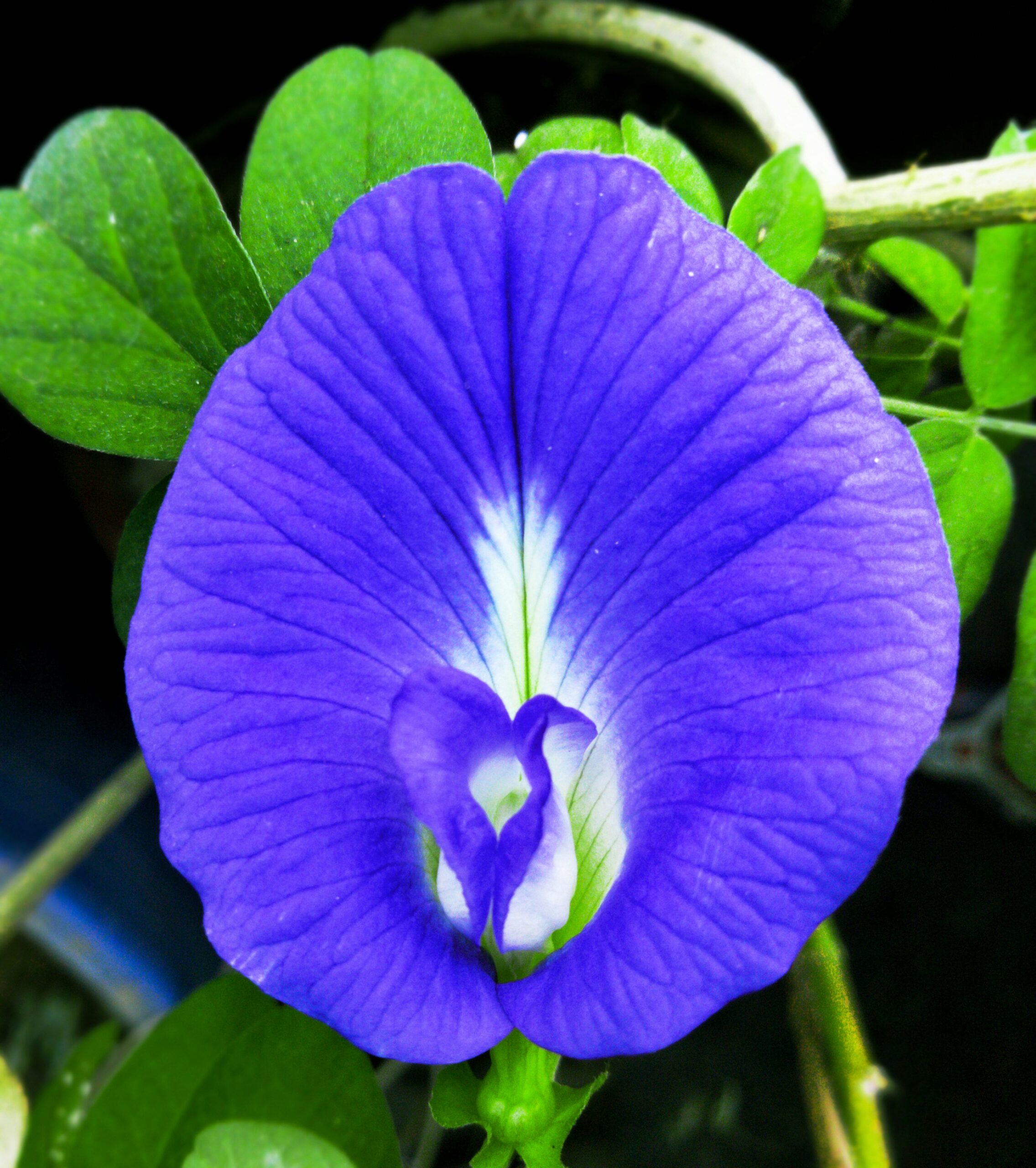
What Is Aparajita?
Aparajita (Clitoria ternatea) is a perennial climbing plant belonging to the Fabaceae family. It produces beautiful blue flowers, although white-flowered varieties also occur. The plant grows well in tropical climates and commonly appears in gardens, hedges, and other warm environments.
The name Aparajita carries an interesting meaning. In Sanskrit-derived usage, it refers to something that is “unconquered” or “undefeated.” Traditional plant names often reflect cultural beliefs, physical characteristics, or perceived qualities.
The flower also has cultural and religious significance in parts of India. Moreover, its vivid blue colour comes largely from naturally occurring anthocyanin pigments, which have attracted scientific interest.
Botanical Profile
- Botanical name: Clitoria ternatea L.
- Family: Fabaceae
- Common names: Aparajita, Butterfly Pea, Asian pigeonwings
- Flower colours: Blue and white
- Growth habit: Perennial climbing herb
- Traditional significance: Medhya and calming applications
Aparajita in Traditional Ayurveda
Traditional Ayurvedic literature and later Ayurvedic practice associate Clitoria ternatea with Medhya activity. Medhya herbs traditionally support buddhi (intellect), smriti (memory), concentration, and mental clarity.
Interestingly, a scientific review of Clitoria ternatea describes its historical Ayurvedic use as a Medhya Rasayana, particularly in traditional approaches concerned with cognitive and neurological health.
Consequently, Aparajita has traditionally attracted attention for people seeking support for:
- Memory and recall
- Concentration
- Mental clarity
- Stress management
- Calmness
- General nervous-system support
However, traditional use does not automatically prove that the flower treats a medical condition. Modern research remains an evolving field, so we should view Aparajita as a subject of traditional and scientific interest rather than a replacement for medical treatment.
Aparajita and Mental Wellness
One of the most interesting traditional associations of Aparajita involves the mind.
Ayurveda places considerable importance on maintaining a balanced mental state. Traditionally, herbs classified as Medhya Rasayana receive attention for their potential role in supporting memory and cognitive function.
Aparajita has therefore been studied for possible effects involving memory, learning, stress, anxiety, and neurological function. Research reviews have reported several promising pharmacological activities, although much of the evidence comes from laboratory and preclinical studies rather than large human clinical trials.
Therefore, it is better to describe Aparajita as a traditionally valued cognitive-supporting herb rather than claim that it definitively improves memory or treats anxiety.
Aparajita and Antioxidant Compounds
The intense blue colour of Aparajita flowers comes from naturally occurring pigments, particularly anthocyanins. The plant also contains several other classes of phytochemicals, including flavonoids, triterpenoids, and other bioactive compounds.
Because of these compounds, researchers have investigated the plant for antioxidant and other biological activities.
In simple terms, antioxidants help protect cells from oxidative stress. Nevertheless, laboratory antioxidant activity does not automatically translate into a proven health benefit in humans. More clinical research can help clarify how these compounds behave in the body.
Aparajita and the Doshas
Ayurveda understands herbs through their effects on Vata, Pitta, and Kapha. However, the traditional Ayurvedic interpretation of Aparajita should not be reduced to a simple “balances all three doshas” claim.
Its traditional use in relation to the mind makes it particularly interesting from a Vata-management perspective, especially when mental restlessness accompanies an unsettled routine.
At the same time, individual constitution, digestion, strength, age, season, and the form in which a herb is taken all matter in Ayurvedic practice.
Therefore, a qualified Ayurvedic practitioner should determine the appropriate preparation and use for an individual.
How Aparajita Is Traditionally Used
Different parts of Clitoria ternatea have appeared in traditional medicinal practices. These include the flowers, roots, leaves, and seeds. However, the part used and the preparation can vary according to the intended traditional application.
Today, people commonly encounter Aparajita as:
1. Herbal Infusion
Dried blue flowers can be steeped in hot water to produce a naturally blue herbal infusion.
The colour may change when acidic ingredients such as lemon are added. This makes Aparajita especially popular as a natural botanical beverage and food-colouring ingredient.
2. Traditional Herbal Preparations
Traditional systems have used different parts of the plant in various preparations. However, concentrated preparations should not be taken casually simply because the plant appears gentle or familiar.
3. Culinary and Beverage Uses
Aparajita flowers have also attracted attention as a natural source of blue colour for foods and beverages.
However, culinary use and medicinal dosing are not the same thing. Therefore, people should not assume that increasing the amount will increase the health benefits.
Aparajita vs. Shankhpushpi: Are They the Same?
This question often creates confusion.
Clitoria ternatea is commonly associated with Shankhpushpi in some traditional and commercial contexts. However, the name Shankhpushpi has historically been applied to more than one plant, depending on the regional or textual tradition.
Therefore, botanical identification matters.
When purchasing an Ayurvedic product, check the botanical name and ingredient list rather than relying only on a common name.
This simple step can prevent confusion between different herbs.
What Modern Research Says About Aparajita
Modern research has investigated Clitoria ternatea for several biological activities. These include antioxidant, anti-inflammatory, antimicrobial, antidiabetic, neuroprotective, and cognitive-related effects.
Some findings appear promising. Nevertheless, researchers still need stronger human clinical evidence before we can make firm conclusions about therapeutic benefits.
In particular, traditional claims surrounding memory and mental health deserve carefully designed clinical studies. Laboratory findings can provide useful clues, but they do not prove that the same effect will occur in humans.
Thus, Aparajita represents an interesting example of how traditional Ayurvedic knowledge can inspire modern scientific research.
Why Aparajita Deserves to Be Remembered
Modern wellness culture often introduces Aparajita through colourful “blue tea.” However, the flower deserves recognition beyond its beautiful appearance.
Its traditional association with Medhya Rasayana, memory, intellect, and mental calmness gives it an important place in the history of Ayurvedic herbal knowledge.
Furthermore, the plant demonstrates how a simple garden flower can carry layers of botanical, cultural, traditional, and scientific significance.
Aparajita may look delicate, but its traditional reputation is anything but ordinary.
Frequently Asked Questions About Aparajita
1. What is Aparajita in Ayurveda?
Aparajita commonly refers to Clitoria ternatea, also known as Butterfly Pea. Ayurveda and related traditional practices have used the plant for various purposes, particularly in traditional approaches involving memory and mental wellness.
2. Is Aparajita good for memory?
Traditionally, Aparajita has been associated with memory, intellect, and cognitive support. Scientific research has also investigated its potential cognitive effects. However, stronger human studies are needed before making definitive claims.
3. Is Aparajita the same as Butterfly Pea?
Yes. Butterfly Pea is one of the common English names for Clitoria ternatea, which is widely known as Aparajita in India.
4. Can Aparajita be used as herbal tea?
Aparajita flowers are commonly prepared as a herbal infusion. The resulting blue colour comes from natural pigments in the flowers. However, medicinal use and casual beverage use should not be treated as identical.
5. Does Aparajita contain antioxidants?
The flowers contain anthocyanins and other phytochemicals that have demonstrated antioxidant activity in laboratory research. However, laboratory findings do not necessarily establish a clinical benefit in humans.
6. Is Aparajita safe for everyone?
Not necessarily. Individual responses can vary, and safety may depend on the preparation, quantity, medications, pregnancy or breastfeeding status, and underlying health conditions. Anyone using Aparajita medicinally should consult a qualified healthcare professional or Ayurvedic practitioner
A Final Thought on Aparajita
Aparajita Ayurvedic flower reminds us that traditional medicine often finds value in plants long before modern science begins investigating them.
Its brilliant blue petals may attract attention first. Yet, its traditional association with memory, intellect, and mental calmness makes Aparajita far more than an ornamental flower.
As modern research continues to explore Clitoria ternatea, this beautiful plant offers an interesting meeting point between Ayurvedic tradition, botanical knowledge, and contemporary scientific inquiry.
Perhaps that is why Aparajita remains so memorable: even its name suggests something that refuses to be defeated.
Disclaimer
This article is intended for educational and informational purposes only. It describes traditional Ayurvedic uses and does not establish that Aparajita can prevent, diagnose, treat, or cure any disease. Scientific evidence for many of its traditional applications remains limited or preliminary. Do not replace prescribed medication with Aparajita or any other herbal remedy. If you are pregnant, breastfeeding, taking medication, managing a medical condition, or considering concentrated herbal preparations, consult a qualified healthcare professional or Ayurvedic practitioner before use.

Hello!!
I’m Dr. Malini Bhat MD (Ayu); an Ayurvedic Doctor and a health blogger. Follow me on social media to get daily health tips which you can easily adapt to a healthy lifestyle.