Among the many fragrant plants mentioned in classical Ayurvedic traditions, Nagakesara holds a distinctive place. Although modern wellness discussions often focus on popular herbs, several valuable flowers remain relatively unfamiliar. Therefore, the Forgotten Ayurvedic Flowers Nagakesara series brings attention to these traditional botanical treasures and explores their historical Ayurvedic significance.
Nagakesara refers primarily to the dried stamens of Mesua ferrea, a beautiful evergreen tree known for its fragrant white flowers. In Ayurveda, practitioners have traditionally valued Nagakesara for its Kashaya (astringent) and aromatic qualities. Moreover, classical traditions associate it with digestive support, Pitta-related conditions, and certain types of excessive bleeding.
Botanical name: Mesua ferrea L.
Family: Calophyllaceae
Common names: Nagakesara, Nagkesar, Ironwood
Ayurvedic part commonly used: Flowers and stamens
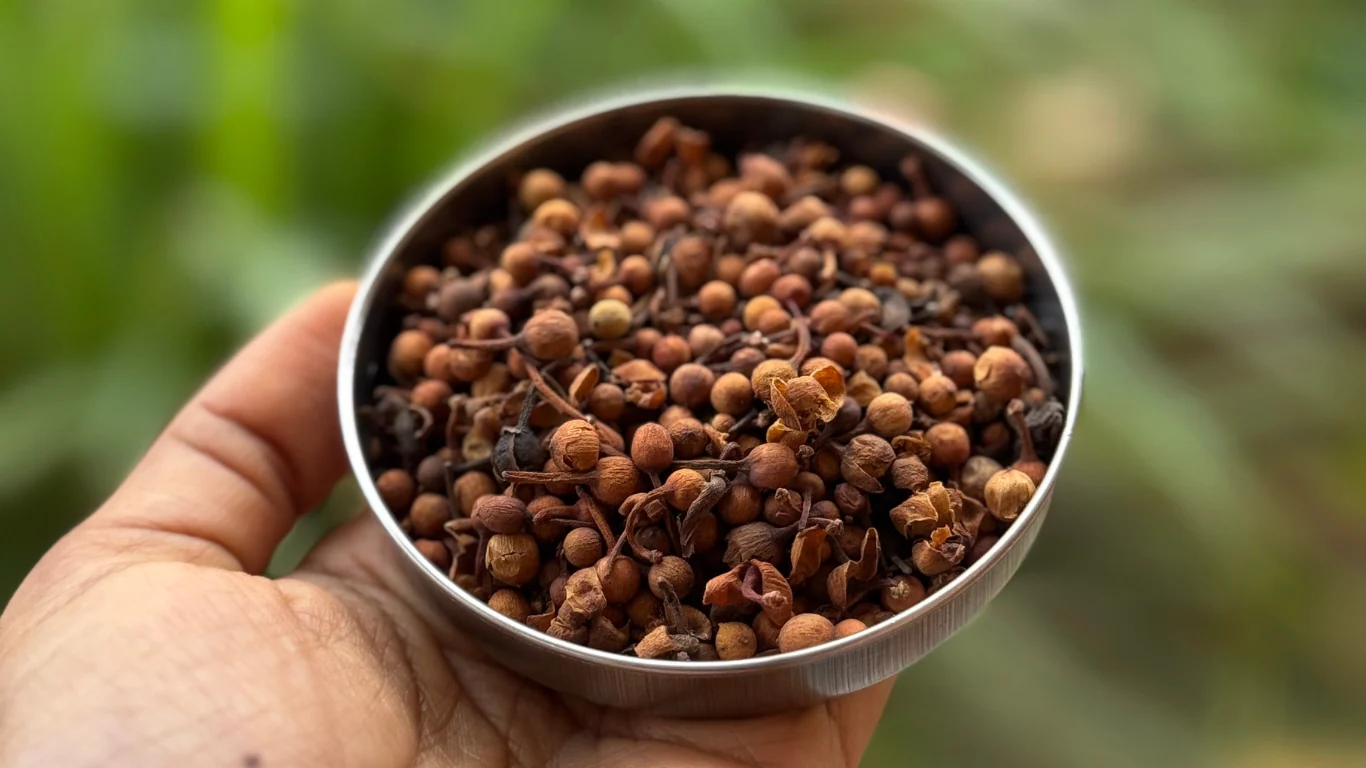
What Is Nagakesara?
Nagakesara comes from the fragrant flowers of the Nagakesara tree. The tree can grow into a large evergreen with dense foliage, while its flowers produce a pleasant and distinctive fragrance.
The flower contains numerous prominent stamens surrounding the central reproductive structures. Traditionally, these stamens form the principal medicinal part used as Nagakesara.
Interestingly, the name itself carries cultural significance. “Naga” can refer to a serpent, while “Kesara” relates to the filament or stamen of a flower. As a result, the name reflects the characteristic appearance of the plant material.
Furthermore, Ayurveda traditionally considers Nagakesara particularly useful when an astringent and aromatic action is desired.
Nagakesara in Ayurveda
Classical Ayurvedic texts describe Nagakesara under different contexts, particularly in relation to digestive health, bleeding disorders, and Pitta-associated conditions.
Its traditional properties are commonly described through Ayurvedic concepts such as:
- Rasa: Kashaya (astringent), with additional traditional descriptions
- Guna: Laghu and Ruksha
- Virya: Sheeta
- Dosha action: Traditionally associated with balancing Pitta and Kapha
- Karma: Grahi, Deepana, and traditional support for Rakta-related conditions
Because Nagakesara has an astringent character, Ayurveda traditionally uses it in situations where excessive fluid loss or bleeding requires support.
However, Ayurvedic interpretation always depends on the person’s Prakriti, Vikriti, Agni, age, diet, and overall health. Therefore, one herb does not suit every person in the same way.
Why Nagakesara Is Considered Important
Nagakesara represents an interesting connection between fragrance, food digestion, and traditional medicine.
Ayurvedic practitioners have historically used it in formulations rather than treating it as an isolated everyday herb. In particular, its astringent nature makes it relevant to traditional approaches involving Atisara (diarrhoea), Rakta-related disorders, and excessive bleeding.
Additionally, its aromatic nature has contributed to its inclusion in certain classical formulations.
As a result, Nagakesara demonstrates how Ayurveda often considers a plant’s taste, qualities, potency, and effects together rather than focusing on a single isolated chemical constituent.
Traditional Uses of Nagakesara
1. Supports Digestive Health
Nagakesara has traditionally been associated with Deepana and Grahi actions.
Ayurvedic traditions use the herb in certain digestive formulations, particularly when loose stools or impaired digestive function accompany excessive fluid loss.
However, persistent diarrhoea can have many causes. Therefore, people should not rely on Nagakesara alone when symptoms continue or become severe.
2. Traditionally Used for Excessive Bleeding
One of the better-known traditional applications of Nagakesara involves Rakta-related disorders and excessive bleeding.
Its astringent nature provides the Ayurvedic rationale for this use. Traditionally, practitioners have incorporated Nagakesara into formulations intended to support conditions involving excessive bleeding, including certain menstrual concerns.
Nevertheless, unexplained or heavy bleeding requires proper medical evaluation. Nagakesara should not replace emergency or conventional medical care.
3. Traditional Support During Heavy Menstrual Flow
Ayurvedic traditions have used Nagakesara in formulations for excessive menstrual bleeding.
From an Ayurvedic perspective, the herb’s Kashaya Rasa and traditional Grahi action help explain this application.
However, heavy menstrual bleeding can result from fibroids, hormonal changes, thyroid disorders, anaemia, medications, or other medical conditions. Consequently, women should seek appropriate medical assessment rather than self-treating persistent heavy bleeding with herbs.
4. Supports Pitta Balance
Nagakesara’s traditionally described Sheeta Virya makes it relevant to Pitta-oriented Ayurvedic approaches.
Practitioners may consider it when excessive heat, bleeding tendencies, or certain Pitta-related digestive complaints appear.
Still, Ayurveda evaluates the complete pattern rather than treating the dosha label alone. Diet, digestion, sleep, stress, and other factors also influence the therapeutic approach.
5. Traditionally Used for Loose Stools
Nagakesara’s astringent and Grahi qualities have traditionally made it useful in formulations for Atisara.
The herb may appear alongside other Ayurvedic ingredients selected according to the individual’s digestive condition.
Importantly, acute diarrhoea can lead to dehydration. Therefore, maintaining adequate fluids and seeking medical care when warning signs appear remains essential.
6. A Fragrant Ingredient in Classical Formulations
Nagakesara also has an important aromatic role.
Its pleasant fragrance makes it a valued ingredient in certain traditional Ayurvedic preparations. Moreover, Ayurveda frequently combines aromatic herbs and flowers to improve the overall qualities and sensory character of formulations.
Thus, Nagakesara has significance beyond a single therapeutic action.
Nagakesara and the Doshas
Ayurveda looks at herbs through the lens of Vata, Pitta, and Kapha.
Nagakesara and Pitta
Nagakesara traditionally receives particular attention in Pitta-oriented conditions because of its cooling potency and astringent character.
Therefore, Ayurvedic practitioners may consider it when Pitta presents with signs such as excessive heat or bleeding tendencies.
Nagakesara and Kapha
Its astringent and light qualities can also make Nagakesara relevant to certain Kapha-related patterns.
However, practitioners usually combine it with other herbs depending on the person’s digestive strength and overall condition.
Nagakesara and Vata
Because Nagakesara possesses astringent and drying qualities, excessive or inappropriate use may not suit people with pronounced Vata aggravation.
Consequently, people with dryness, constipation, or depleted tissues should avoid self-prescribing it simply because it is considered a traditional Ayurvedic herb.
Nagakesara and Agni
Ayurveda considers Agni, or digestive strength, central to overall health.
Nagakesara appears in traditional digestive formulations because practitioners have historically associated it with Deepana and Grahi actions.
However, stronger digestion does not always mean taking more digestive herbs. Instead, Ayurveda considers the underlying cause of poor digestion.
For example, irregular meals, excessive snacking, poor sleep, stress, overeating, and incompatible foods can all affect Agni. Therefore, dietary habits remain an important part of digestive care.
Nagakesara in Traditional Ayurvedic Formulations
Nagakesara does not traditionally function only as a standalone ingredient. Instead, Ayurvedic formulations combine it with other herbs according to the desired therapeutic action.
You may encounter Nagakesara in traditional preparations associated with:
- Digestive complaints
- Excessive menstrual bleeding
- Pitta-related conditions
- Rakta-related disorders
- Diarrhoea
- Certain women’s health formulations
- Fragrant herbal preparations
The exact formulation, dosage, processing method, and accompanying herbs can significantly change how a preparation works.
Therefore, classical formulations should ideally come from reliable Ayurvedic sources and qualified practitioners.
What Makes Nagakesara Different From Other Ayurvedic Flowers?
Several Ayurvedic flowers have gained recognition for their fragrance or medicinal properties. However, Nagakesara stands out because Ayurveda traditionally uses its stamens as an important medicinal material.
Furthermore, its combination of fragrance, astringency, and cooling potency gives it a distinctive place among traditional botanicals.
While flowers such as Ashoka, Japa, Lotus, and Jasmine have their own Ayurvedic applications, Nagakesara carries a particularly strong traditional association with Rakta-related conditions and digestive support.
How Nagakesara Fits Into Modern Herbal Research
Modern researchers have investigated Mesua ferrea for its phytochemical and biological properties. Studies have explored compounds present in different parts of the plant, including flavonoids, xanthones, coumarins, and other constituents.
Laboratory research has also examined potential antioxidant, antimicrobial, anti-inflammatory, and other biological activities.
However, laboratory findings do not automatically prove that a traditional preparation will produce the same effect in humans.
Therefore, more high-quality clinical research remains necessary before modern medicine can establish definitive therapeutic claims for Nagakesara.
Nagakesara: Traditional Wisdom Meets Modern Understanding
Nagakesara illustrates an important principle of Ayurveda: a plant cannot be understood only by looking at one isolated compound or one symptom.
Ayurveda considers:
- Rasa
- Guna
- Virya
- Vipaka
- Dosha
- Agni
- Dhatu
- Prakriti
- The individual’s overall condition
Consequently, traditional use often depends on context.
Modern science, meanwhile, examines the plant through phytochemistry, pharmacology, toxicology, and clinical research. Both approaches can provide useful perspectives, although they answer different questions.
How Nagakesara Is Traditionally Used
Traditional Ayurvedic practitioners may use Nagakesara as part of powders, decoctions, compound formulations, and other preparations.
However, dosage and preparation depend on the formulation and the individual’s health condition.
For this reason, using raw Nagakesara powder without professional guidance may not be appropriate for everyone.
In addition, the quality and identity of herbal products matter. Adulteration and incorrect botanical identification can reduce safety and effectiveness.
Precautions and Safety
Nagakesara has a long history of traditional use, but that does not mean unrestricted use is appropriate.
Keep the following points in mind:
- Avoid self-treating unexplained bleeding.
- Seek medical advice for unusually heavy or prolonged menstrual bleeding.
- Pregnant or breastfeeding women should consult a qualified healthcare professional before using medicinal doses.
- People taking medicines should discuss herbal use with their healthcare provider.
- Excessive use may not suit people with strong Vata or dryness.
- Choose properly identified and quality-tested herbal products.
- Use classical formulations under the guidance of a qualified Ayurvedic practitioner.
Most importantly, traditional use should complement appropriate healthcare rather than replace necessary diagnosis or treatment.
Frequently Asked Questions About Nagakesara
1. What is Nagakesara in Ayurveda?
Nagakesara is an Ayurvedic medicinal material primarily obtained from the stamens of Mesua ferrea. Ayurveda traditionally values it for its astringent, aromatic, and cooling properties.
2. What is Nagakesara traditionally used for?
Ayurvedic traditions use Nagakesara in formulations associated with digestive complaints, excessive bleeding, menstrual concerns, and certain Pitta-related conditions.
3. Is Nagakesara a flower?
Nagakesara comes from the flowers of the Mesua ferrea tree. More specifically, the dried stamens commonly serve as the medicinal material known as Nagakesara.
4. Does Nagakesara balance Pitta?
Traditionally, Nagakesara’s cooling potency and astringent qualities make it relevant to Pitta-oriented conditions. However, the appropriate use depends on the individual’s constitution and health status.
5. Can Nagakesara help with heavy periods?
Ayurvedic traditions have used Nagakesara in formulations for excessive menstrual bleeding. However, heavy periods can have underlying medical causes, so persistent or severe bleeding requires professional evaluation.
6. Is Nagakesara good for digestion?
Traditionally, Nagakesara appears in formulations for certain digestive complaints, particularly loose stools. However, the appropriate herb depends on the underlying digestive pattern.
7. Can everyone take Nagakesara?
No. Herbal suitability depends on the individual’s constitution, health condition, medicines, and the formulation used. Therefore, professional guidance is preferable for medicinal use.
8. What is the botanical name of Nagakesara?
The botanical name commonly associated with Nagakesara is Mesua ferrea L.
Final Thoughts
Nagakesara may not receive the same attention as some of today’s popular Ayurvedic herbs, yet this fragrant flower has a fascinating place in traditional medicine.
Its astringent nature, cooling potency, aromatic character, and traditional association with Rakta-related conditions and digestive health make it an interesting addition to the Forgotten Ayurvedic Flowers series.
Moreover, Nagakesara reminds us that Ayurveda’s botanical heritage extends far beyond the herbs that dominate modern wellness conversations. By studying these lesser-known plants carefully, we can better appreciate the depth of traditional Ayurvedic knowledge while also recognizing the need for modern research and responsible use.
Disclaimer
This article is for educational purposes only and does not replace professional medical or Ayurvedic advice. Consult a qualified healthcare professional or Ayurvedic practitioner before using Nagakesara medicinally, especially during pregnancy, breastfeeding, illness, or while taking medicines.

Hello!!
I’m Dr. Malini Bhat MD (Ayu); an Ayurvedic Doctor and a health blogger. Follow me on social media to get daily health tips which you can easily adapt to a healthy lifestyle.