The Flame of the Forest in Ayurveda, traditionally known as Palasha, holds a fascinating place in India’s botanical and medicinal heritage. The brilliant orange-red flowers of Butea monosperma brighten dry forests during the warmer months and give the tree its unforgettable name. However, Palasha offers more than visual beauty. Ayurvedic traditions have valued different parts of this tree, including its flowers, seeds, bark, gum, and leaves.
Although modern lifestyles often overlook traditional plants such as Palasha, Ayurveda continues to recognize its distinctive qualities. Moreover, its historical importance extends beyond medicine into food traditions, rituals, natural dyes, and cultural practices.
What Is the Flame of the Forest?
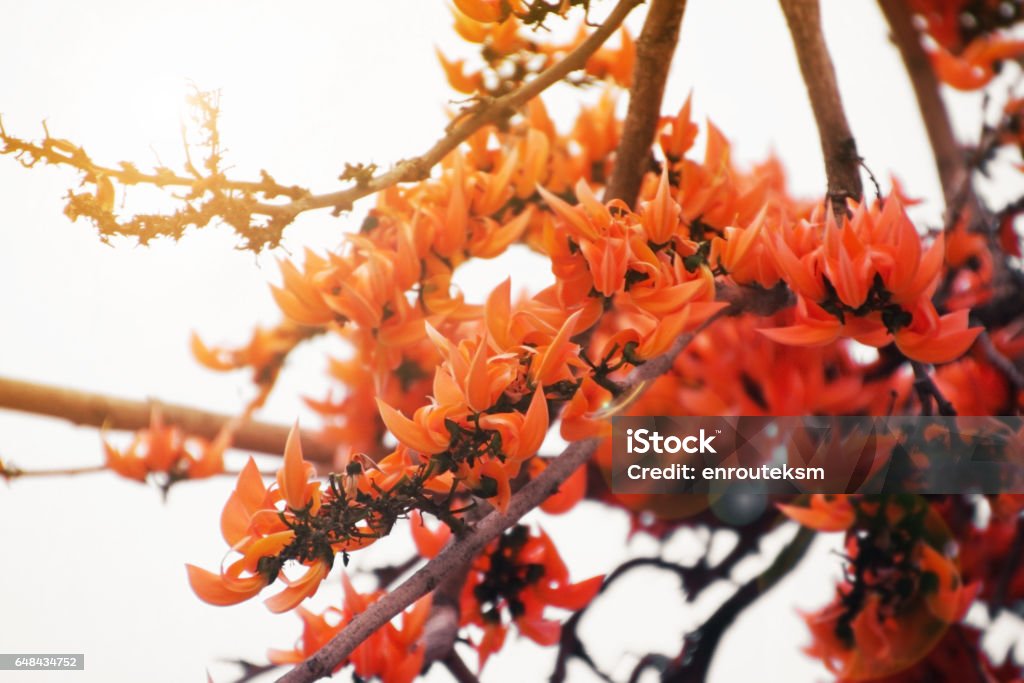
The Flame of the Forest, or Palasha, belongs to the Fabaceae family. Its botanical name is Butea monosperma. The tree grows widely across the Indian subcontinent and produces vivid orange or orange-red flowers, particularly when many of its leaves have fallen.
Because of these fiery blossoms, people commonly call Palasha the Flame of the Forest.
In Sanskrit and Ayurvedic literature, Palasha appears under several traditional names. Ayurvedic practitioners have historically used various parts of the plant according to the intended purpose and preparation.
The flowers themselves contain naturally occurring pigments, which traditionally made them useful for producing natural colours.
Flame of the Forest in Ayurveda
Ayurveda considers Palasha a plant with distinctive rasa, guna, virya, and vipaka characteristics. Traditional Ayurvedic descriptions associate Palasha with properties that can support specific digestive and metabolic functions.
In particular, classical Ayurvedic practice has traditionally used Palasha preparations in situations involving:
- Digestive disturbances
- Intestinal discomfort
- Certain parasitic conditions
- Kapha-related imbalances
- Skin-related concerns
- Wound care
- Excessive mucus and congestion in selected traditional applications
However, the therapeutic action depends on the part of the plant, preparation, dosage, and individual constitution.
Therefore, people should not assume that every traditional use applies equally to the flowers, seeds, bark, or gum.
Palasha Flowers and Digestive Wellness
Traditional Ayurveda associates Palasha with digestive support. The plant’s different parts have appeared in traditional preparations aimed at maintaining healthy digestion and intestinal function.
The flowers of the Flame of the Forest have also received attention in traditional herbal practices. Ayurveda generally emphasizes the importance of maintaining Agni, or digestive fire, because balanced digestion plays a central role in overall health.
When digestion functions well, Ayurveda considers the body better equipped to process food and maintain healthy tissue formation.
Nevertheless, Palasha should not replace medical evaluation when someone experiences persistent abdominal pain, diarrhea, constipation, unexplained weight loss, or other ongoing digestive symptoms.
Palasha for Traditional Skin Care
Traditional Indian herbal practices have also used Palasha in external applications.
Ayurvedic preparations containing parts of the plant have historically appeared in approaches to certain skin and wound-related concerns. Practitioners selected the preparation according to the nature of the condition and the individual’s doshaand overall health.
Furthermore, traditional herbal preparations often combine Palasha with other botanicals rather than relying on one plant alone.
This illustrates an important principle of Ayurveda: the same herb may serve different purposes depending on how practitioners prepare and combine it.
Flame of the Forest and Kapha
Ayurvedic traditions often examine herbs through their effects on Vata, Pitta, and Kapha.
Palasha has traditionally been associated with qualities that can help address certain Kapha-related patterns. These patterns may include heaviness, sluggish digestion, and excess mucus.
However, Ayurvedic interpretation remains individualized. A preparation that suits one person may not suit another, particularly when Pitta or Vata qualities are prominent.
Consequently, Ayurvedic practitioners consider factors such as constitution, digestive strength, age, season, diet, and the specific health concern before recommending a medicinal preparation.
The Natural Colour of Palasha Flowers
One of the most beautiful aspects of the Flame of the Forest involves its natural colour.
Traditionally, people used the bright flowers to create yellow, orange, or saffron-toned natural dyes. In some regions, people also used Palasha flowers to prepare colours for festivals.
This traditional practice highlights another fascinating quality of Ayurvedic plants: many served practical, medicinal, cultural, and ecological roles at the same time.
Today, interest in natural dyes has renewed appreciation for plants such as Palasha.
Palasha in Indian Culture
The Flame of the Forest carries deep cultural significance in India.
Its dramatic flowers appear when the tree stands almost bare of leaves. As a result, the landscape can suddenly transform into a sea of orange and red blossoms.
Poets and writers have traditionally compared these flowers with flames, fire, and glowing embers. Therefore, the name Flame of the Forest perfectly captures the visual character of the tree.
Palasha also appears in traditional Indian rituals and literature, making it much more than an ordinary forest tree.
Palasha and Traditional Herbal Knowledge
Ayurveda does not view plants simply as collections of isolated chemical compounds. Instead, traditional practitioners consider their qualities, actions, preparation methods, dosage, and interaction with the individual’s constitution.
When it comes to Palasha, this distinction matters. The flower, seed, bark, gum, and leaves do not necessarily have identical properties or uses. Traditional texts and practitioners therefore differentiate between plant parts when describing therapeutic applications.
In addition, traditional preparations may involve specific processing methods that influence how the plant functions. Because of this, casually preparing concentrated herbal remedies at home can create unnecessary risks.
What Modern Research Says
Modern scientific research has investigated Butea monosperma for its phytochemical composition and potential biological activities. Researchers have studied compounds present in different parts of the plant, including flavonoids, phenolic compounds, and other constituents.
Preclinical research has explored antioxidant, antimicrobial, anti-inflammatory, and other biological activities associated with extracts of Butea monosperma.
However, laboratory and animal findings do not automatically establish clinical effectiveness in humans. Researchers still need well-designed human studies to determine appropriate doses, safety, and therapeutic effectiveness.
Therefore, it is best to view modern research as an evolving area rather than treating preliminary findings as proven medical benefits.
How Palasha Fits Into Ayurveda Today
The Flame of the Forest reminds us that India’s traditional medical heritage includes many plants that receive far less attention than popular herbs such as Ashwagandha, Turmeric, or Brahmi.
Palasha represents this forgotten botanical knowledge beautifully.
Beyond its striking appearance, Palasha offers several traditional and ecological benefits. Its vibrant flowers provide natural colour, the tree supports biodiversity, and various plant parts have long been valued in Ayurvedic practices.At the same time, its cultural symbolism connects Ayurveda with India’s broader relationship with plants and forests.
As interest in traditional wellness grows, plants such as Palasha deserve careful documentation and responsible study.
Frequently Asked Questions
What is the Flame of the Forest in Ayurveda?
The Flame of the Forest is commonly known as Palasha and has the botanical name Butea monosperma. Ayurveda has traditionally used different parts of the plant for various purposes.
Is Palasha the same as Flame of the Forest?
Yes. Palasha is the traditional name commonly associated with the Flame of the Forest tree, Butea monosperma.
What are Palasha flowers traditionally used for?
Traditional practices have used Palasha flowers in herbal preparations and natural colour-making. Ayurvedic applications vary according to the plant part and preparation.
Is Palasha safe to consume?
Safety depends on the plant part, preparation, dosage, and the individual’s health. Medicinal use should follow guidance from a qualified Ayurvedic practitioner or healthcare professional rather than self-prescribing concentrated preparations.
Why is Palasha called Flame of the Forest?
The tree produces brilliant orange-red flowers, often when it has very few leaves. The intense colour makes the tree appear as though it is covered in flames.
A Forgotten Flower Worth Remembering
The Flame of the Forest in Ayurveda represents the remarkable relationship between traditional medicine, nature, culture, and everyday life.
From its brilliant flowers to its traditional medicinal applications, Palasha has played many roles throughout India’s botanical history. Yet, despite its cultural and Ayurvedic importance, it remains unfamiliar to many people today.
Remembering plants such as Palasha does not mean accepting every traditional claim without question. Instead, it encourages us to preserve traditional knowledge while studying it through careful scientific research.
The next time you see a forest glowing with orange-red flowers, you may recognize the Flame of the Forest—not simply as a beautiful tree, but as Palasha, a plant deeply woven into India’s traditional heritage
Disclaimer
This article is intended for educational and informational purposes only. It discusses traditional Ayurvedic knowledge and should not be considered medical advice. Traditional uses of Palasha do not necessarily mean that modern clinical research has established its effectiveness or safety for treating specific diseases. Do not self-medicate with Palasha or other medicinal plants, particularly during pregnancy, breastfeeding, childhood, or when taking prescription medicines. Consult a qualified Ayurvedic practitioner or other appropriate healthcare professional before using Palasha medicinally.

Hello!!
I’m Dr. Malini Bhat MD (Ayu); an Ayurvedic Doctor and a health blogger. Follow me on social media to get daily health tips which you can easily adapt to a healthy lifestyle.