Champaka (Michelia champaca) is one of Ayurveda’s fragrant and culturally significant flowers. Known for its rich golden-yellow blooms and captivating aroma, Champaka has held an important place in traditional Indian wellness practices, perfumery, worship, and classical herbal traditions. Although modern life often overlooks this beautiful flower, Champaka in Ayurveda has a long history of traditional use.
Interestingly, Ayurveda does not view aromatic flowers merely as decorative plants. Instead, their fragrance, qualities, and traditional applications can form part of a broader approach to supporting balance and wellbeing. Therefore, Champaka deserves a place among the forgotten Ayurvedic flowers that continue to attract interest today.
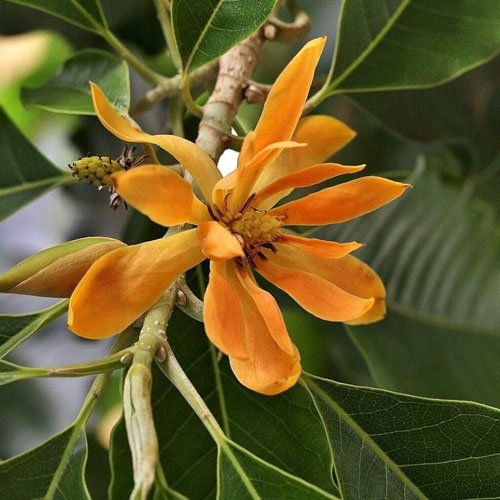
What Is Champaka?
Champaka, traditionally identified as Michelia champaca (also classified botanically under Magnolia champaca), belongs to the Magnoliaceae family. The tree produces beautiful, strongly fragrant flowers that range from yellow to orange-yellow.
In India, people have traditionally valued Champaka for its:
- Fragrant flowers
- Ornamental beauty
- Traditional Ayurvedic applications
- Religious significance
- Use in natural perfumes and aromatic preparations
Moreover, different parts of the Champaka tree appear in traditional medicinal practices. However, the flower remains particularly well known for its aroma and cultural importance.
Champaka in Ayurveda
In traditional Ayurveda, Champaka in Ayurveda appears in discussions of aromatic and herbal substances. Classical Ayurvedic traditions associate Champaka with qualities that may support certain Kapha- and Vata-related concerns.
Traditionally, practitioners have used different parts of the plant in various preparations. The flowers, bark, leaves, and other parts may appear in regional and classical practices.
However, traditional use does not automatically establish modern clinical effectiveness. Therefore, people should view Champaka primarily through its traditional Ayurvedic context unless stronger clinical evidence becomes available.
Traditional Ayurvedic Uses of Champaka
Champaka has a long history of traditional use. Nevertheless, its applications can vary according to the plant part, preparation, dosage, and individual constitution.
1. Supports Respiratory Comfort
Traditional herbal practices have used aromatic plants such as Champaka in preparations intended to support respiratory comfort.
Because Ayurveda often considers Kapha when discussing excess mucus and congestion, aromatic herbs and flowers may form part of traditional Kapha-balancing approaches.
However, Champaka should not replace medical treatment for asthma, persistent cough, breathing difficulty, or respiratory infections.
2. Traditionally Used for Digestive Support
Ayurvedic traditions also associate aromatic substances with Agni, or digestive fire.
Champaka has traditionally appeared in preparations intended to support digestion and appetite. In this context, practitioners may consider the person’s digestive strength, constitution, and doshic balance before selecting an appropriate preparation.
Therefore, self-prescribing concentrated herbal preparations may not provide the same results as traditional individualized Ayurvedic care.
3. Traditionally Used for Skin Care
Traditional Indian herbal practices have also used Champaka and other aromatic botanicals in external applications.
The flower’s fragrance makes it especially attractive for traditional bathing preparations, oils, and aromatic blends.
Nevertheless, people with sensitive skin should perform appropriate precautions before applying any botanical preparation
4. Supports a Calm and Pleasant Atmosphere
Perhaps the most familiar quality of Champaka comes from its powerful fragrance.
People have traditionally used Champaka flowers in homes, temples, garlands, and natural perfumes. Consequently, the flower has long been associated with a soothing and uplifting sensory experience.
Although fragrance can influence mood and perception, that does not mean Champaka treats anxiety, depression, or other mental health conditions.
Champaka and the Doshas
Ayurveda explains health through the balance of Vata, Pitta, and Kapha. Traditional descriptions of aromatic herbs often consider their effects on these doshas.
Champaka’s traditional qualities may make it particularly interesting in contexts involving Vata and Kapha. However, its effect can depend on the preparation and the individual.
For example:
- Vata: Its pleasant aroma may fit traditional approaches that aim to create warmth and comfort.
- Kapha: Its aromatic nature may complement traditional Kapha-balancing practices.
- Pitta: Strongly aromatic or warming preparations may not suit every Pitta-dominant individual.
Therefore, Ayurveda emphasizes Prakriti, current imbalance, digestion, age, season, and overall health rather than treating everyone in the same way.
Champaka Flower and Traditional Fragrance
Champaka holds a special place in India’s traditional fragrance culture.
Its rich floral aroma has made it popular in:
- Natural perfumes
- Floral garlands
- Temple offerings
- Traditional bathing rituals
- Aromatic oils
- Cultural ceremonies
Furthermore, Champaka demonstrates how Ayurveda and traditional Indian botanical knowledge often extend beyond internal medicine. Fragrance, environment, ritual, and sensory wellbeing can also play a role in traditional approaches to health.
Champaka in Traditional Indian Culture
Champaka carries deep cultural significance across India and other parts of South and Southeast Asia.
Its golden flowers often appear in temples and devotional settings. Additionally, the tree’s fragrance has made it a cherished ornamental plant.
Because of this cultural history, Champaka represents more than an Ayurvedic botanical. It also connects traditional medicine with India’s long-standing relationship with flowers, forests, fragrance, and spirituality.
What Makes Champaka an Ayurvedic Flower?
Not every traditional flower has a strong medicinal role. However, Champaka stands out because traditional systems have valued several aspects of the plant.
Its significance comes from the combination of:
- Aromatic qualities
- Traditional herbal use
- Cultural importance
- External applications
- Traditional dosha-based interpretations
As a result, Champaka in Ayurveda provides an interesting example of how flowers can occupy several roles within traditional Indian knowledge systems.
How Is Champaka Traditionally Used?
Traditional use depends on the plant part and preparation. Historical and regional practices may include flowers in aromatic preparations, oils, external applications, and herbal formulations.
However, people should avoid experimenting with concentrated preparations simply because a plant has a long traditional history.
Instead, a qualified Ayurvedic practitioner can determine whether a particular preparation suits an individual’s Prakriti, Vikriti, Agni, age, and health condition.
Champaka: Traditional Knowledge Meets Modern Research
Modern research has investigated Magnolia champaca and related Magnolia species for various phytochemical and biological properties.
Researchers have identified several naturally occurring compounds in different parts of the plant. Laboratory and preliminary studies have explored antioxidant, antimicrobial, anti-inflammatory, and other biological activities.
However, laboratory findings do not automatically prove that Champaka treats a particular disease in humans.
Therefore, more high-quality human research remains necessary before we can make strong therapeutic claims.
Safety and Precautions
Natural does not always mean risk-free.
Avoid using concentrated Champaka preparations internally without professional guidance. Pregnant or breastfeeding individuals, children, older adults, and people taking regular medicines should seek appropriate medical advice before using medicinal preparations containing Champaka.
In addition, do not use Champaka as a substitute for prescribed treatment.
If you experience persistent pain, breathing difficulty, fever, severe digestive symptoms, or other concerning symptoms, consult a qualified healthcare professional promptly.
Frequently Asked Questions About Champaka
1. What is Champaka?
Champaka is a fragrant flowering tree traditionally identified as Michelia champaca, now commonly classified as Magnolia champaca. Its flowers are famous for their strong fragrance and golden-yellow colour.
2. What is Champaka used for in Ayurveda?
Champaka in Ayurveda has traditionally appeared in aromatic and herbal preparations. Traditional practices associate different parts of the plant with digestive, respiratory, and external applications.
3. Is Champaka good for digestion?
Traditional Ayurvedic practices have used Champaka in certain preparations for digestive support. However, the appropriate preparation and dosage depend on the individual, so self-medication is not recommended.
4. Does Champaka balance the doshas?
Traditional Ayurvedic descriptions may associate Champaka with Vata- and Kapha-related applications. However, its suitability depends on the person’s constitution, current imbalance, preparation, and dosage.
5. Can Champaka be used for skin care?
Traditional practices have included Champaka in some external aromatic and herbal preparations. However, users should take care with concentrated preparations and check for skin sensitivity.
6. Is Champaka scientifically proven to treat diseases?
Current research provides interesting preliminary findings about compounds found in Magnolia champaca. However, stronger human clinical studies are needed before researchers can establish specific therapeutic claims.
Final Thoughts
Champaka in Ayurveda represents a beautiful connection between traditional medicine, fragrance, culture, and botanical knowledge. Its golden flowers have attracted attention for centuries, not only because of their appearance but also because of their traditional applications.
Today, however, Champaka remains less familiar than many commonly discussed Ayurvedic herbs. By revisiting traditional flowers such as Champaka, we can better appreciate the depth of India’s botanical heritage while also approaching traditional claims with appropriate scientific caution.
As with any medicinal plant, responsible use matters. Traditional knowledge can provide valuable context, while modern research can help us understand where the evidence truly stands.
Disclaimer
This article is intended for educational and informational purposes only. It does not constitute medical advice, diagnosis, or treatment. Traditional Ayurvedic uses described here reflect historical and traditional practices and do not necessarily represent scientifically proven medical benefits. Do not use Champaka or any herbal preparation to treat a medical condition without consulting a qualified Ayurvedic practitioner or other appropriate healthcare professional. Pregnant or breastfeeding individuals, children, and people taking medicines should seek professional guidance before using herbal products.

Hello!!
I’m Dr. Malini Bhat MD (Ayu); an Ayurvedic Doctor and a health blogger. Follow me on social media to get daily health tips which you can easily adapt to a healthy lifestyle.