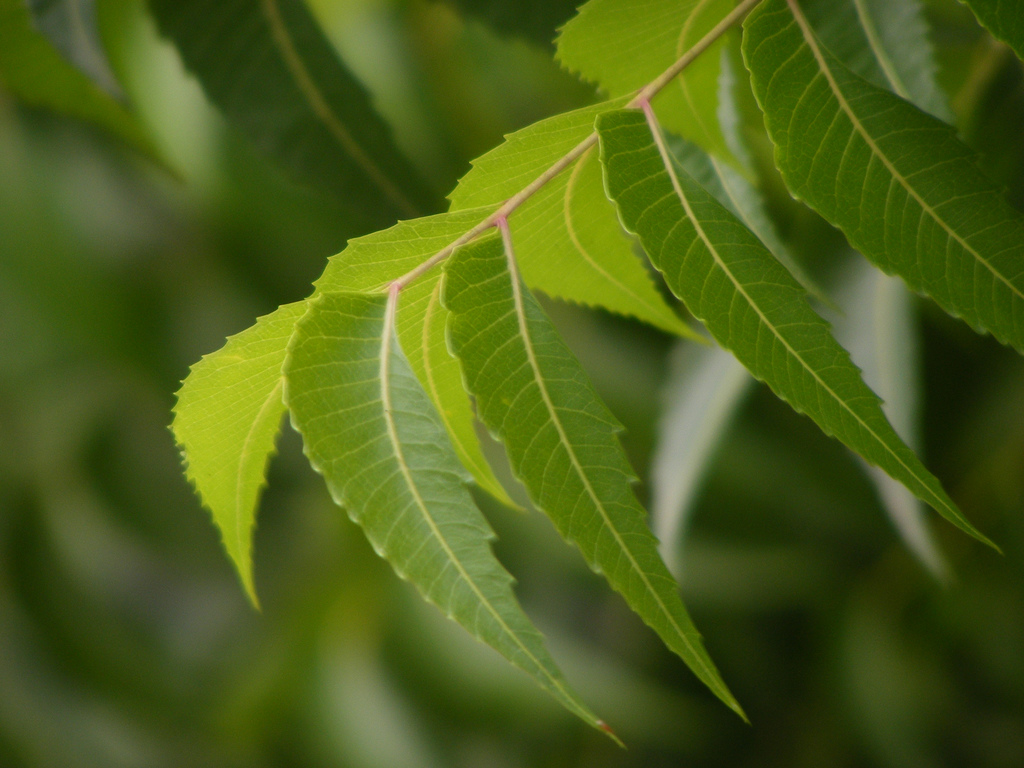
Among the medicinal trees described in Ayurveda, Nimba in Ayurveda occupies a particularly interesting position. Known today as Neem, Nimba refers botanically to Azadirachta indica A.Juss., a member of the Meliaceae family. Although modern wellness culture often reduces Neem to a simple “detox” or “skin-cleansing” herb, classical Ayurveda presents a much more sophisticated picture. Nimba has a distinctly bitter profile and traditionally enters therapeutic reasoning around Pitta, Kapha, Rakta, skin disorders, inflammation, and krimi.
Modern phytochemical research makes Nimba even more fascinating. Scientists have identified numerous limonoids, flavonoids, phenolic compounds, terpenoids, fatty acids, and other secondary metabolites across different parts of the plant. Researchers have also investigated these compounds for antimicrobial, anti-inflammatory, antioxidant, metabolic, insecticidal, and other biological activities. However, laboratory activity does not automatically translate into clinical effectiveness, so Nimba deserves a balanced scientific interpretation rather than exaggerated claims.

Hello!!
I’m Dr. Malini Bhat MD (Ayu); an Ayurvedic Doctor and a health blogger. Follow me on social media to get daily health tips which you can easily adapt to a healthy lifestyle.